

 Cavalry Scout (19D) is a US Army MOS that specializes in armored reconnaissance, reconnaissance by force, anti-armor, foot patrols and adjusting indirect fire (artillery, mortars).
The exact job varies by unit and which corps the unit serves under. Most units will require mastery of several weapons systems and vehicles and will offer supplementary cross-training in combat-first-aid, airborne-assault, NATO weapon systems and navigation. Additionally, scouts are allowed to attend the Army's sniper school, but cannot receive the skill identifier of "sniper".
Vehicles in common use by today's Cavalry include:
Humvee (on which every scout must be able to perform upkeep and basic repairs and operate mounted weapon systems [M248-B machine gun, TOW missile launcher, M2 .50cal machine gun, Mk 19 automatic grenade launcher]),
M3 Bradley fighting vehicle (on which every scout must be trained on all weapons systems [M248-C machine gun, 20mm cannon, TOW missile launcher] as well as driving, loading and stowing of the vehicle and operating the turret).
M1126 Stryker (which has a modular weapons system).
Additionally, a scout must be able to carry out challenging feats on foot. A scout must be proficient at least with the M16 rifle family, underslung 40mm grenade launcher, tripod mounted TOW missile launcher, AT4 missile launcher and M9 bayonet (being phased out) and may crosstrain on anti-air missile systems, mortars and the newer Javelin missile launcher. Total kit weight on foot may be well over 100 pounds. While dismounted, a scout must be able to improvise a fighting position, serve as a radio operator, navigate from a map, call for artillery fire and report enemy troop movements, numbers and vehicles on the fly. A scout's familiarity with compass, map, azimuth and triangulation is his biggest asset to the unit.
Physical and mental demands are the highest of all combat jobs in the US Army, except the Rangers and Special Forces. Many scouts see continuing into the Rangers or Special Forces as a natural progression of their skill-set.
Cavalry Scout (19D) is a US Army MOS that specializes in armored reconnaissance, reconnaissance by force, anti-armor, foot patrols and adjusting indirect fire (artillery, mortars).
The exact job varies by unit and which corps the unit serves under. Most units will require mastery of several weapons systems and vehicles and will offer supplementary cross-training in combat-first-aid, airborne-assault, NATO weapon systems and navigation. Additionally, scouts are allowed to attend the Army's sniper school, but cannot receive the skill identifier of "sniper".
Vehicles in common use by today's Cavalry include:
Humvee (on which every scout must be able to perform upkeep and basic repairs and operate mounted weapon systems [M248-B machine gun, TOW missile launcher, M2 .50cal machine gun, Mk 19 automatic grenade launcher]),
M3 Bradley fighting vehicle (on which every scout must be trained on all weapons systems [M248-C machine gun, 20mm cannon, TOW missile launcher] as well as driving, loading and stowing of the vehicle and operating the turret).
M1126 Stryker (which has a modular weapons system).
Additionally, a scout must be able to carry out challenging feats on foot. A scout must be proficient at least with the M16 rifle family, underslung 40mm grenade launcher, tripod mounted TOW missile launcher, AT4 missile launcher and M9 bayonet (being phased out) and may crosstrain on anti-air missile systems, mortars and the newer Javelin missile launcher. Total kit weight on foot may be well over 100 pounds. While dismounted, a scout must be able to improvise a fighting position, serve as a radio operator, navigate from a map, call for artillery fire and report enemy troop movements, numbers and vehicles on the fly. A scout's familiarity with compass, map, azimuth and triangulation is his biggest asset to the unit.
Physical and mental demands are the highest of all combat jobs in the US Army, except the Rangers and Special Forces. Many scouts see continuing into the Rangers or Special Forces as a natural progression of their skill-set.
Minor edit?
8 people found this useful
Was this answer useful?
More:
- The professional company mobilelyme provides all the information on Mobile phone accessories.
- Credit Matters Singapore Licensed Money Lender is a professional firm offering fast and affordable loans at the lowest interest rates. We welcome foreigners with bad credit.
INTERESTING FACTS
-
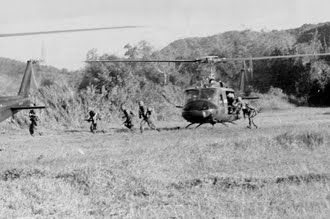
The Battle of Ia Drang was the first major battle between regulars of the United States Army and regulars of the People's Army of Vietnam (PAVN / NVA) of North Vietnam during the Vietnam War. The two-part battle took place between November 14 and November 18, 1965...
-
The Ia Drang Valley is a valley located about 32 miles south west of Pleiku in the Central Highlands of Vietnam. It is mostly known for the Battle of Ia Drang that happened there during the early days (1965) of the Vietnam War.
INTERESTING VIDEO
Share this Post
latest post
-
 Mounted Units March 16, 2024
 -
 Scotland Yard careers February 15, 2024
 -
 Mounted Police Victoria January 16, 2024
 -
 Royal Canadian Mounted Police Horse December 17, 2023
 -
 North West Mounted Police November 17, 2023
 -
 Royal Canadian Mounted Police (RCMP) October 18, 2023
 -
 Mounted Police groom jobs September 18, 2023
 -
 Mounted Police uniform August 19, 2023
 -
 Upper Mount Gravatt Police Station July 20, 2023